
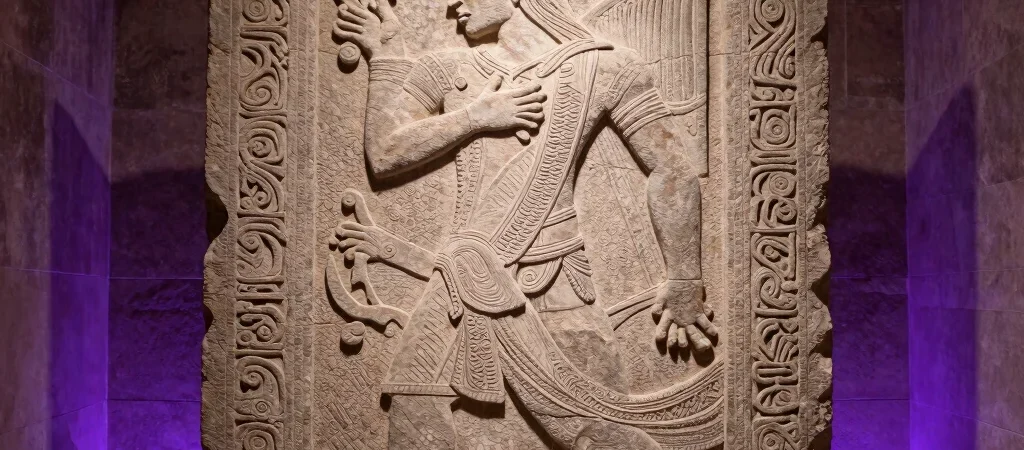
Deep beneath the surface of Malta sits the Hypogeum of Hal Saflieni, a stone sanctuary carved directly into limestone over five thousand years ago. Visitors who step into its Oracle Room quickly notice a strange sonic phenomenon. A normal speaking voice dissipates into silence, but a low male hum triggers a resonant echo that vibrates through the solid rock walls.
Resonating at One Hundred and Ten Hertz
Acoustic archaeologists measuring ancient chambers across Europe and the Mediterranean discovered a startling pattern. Subterranean stone tombs, long barrows, and megalithic enclosures consistently amplify sound frequencies near one hundred and ten hertz. This specific acoustic pitch matches the natural resonant frequency of small enclosed stone structures.
Neurological Impact of Low Frequency Resonance
Neuroscientists studying brain activity during exposure to one hundred and ten hertz sound patterns observed a temporary shift in neural processing. The brain deactivates language processing centers in the left hemisphere while heightening emotional and spatial perception in the right hemisphere. Ancient builders may have crafted these stone spaces specifically to induce shared sensory states during rituals.
Engineering Sound Without Modern Measuring Tools
Creating these acoustic properties required sophisticated knowledge of stone density, wall curvature, and chamber volume. By carving wall niches that act as Helmholtz resonators, Neolithic craftspeople shaped how sound waves reflected and collided. Their monuments stand as proof that ancient architecture was designed for human ears as much as human eyes.